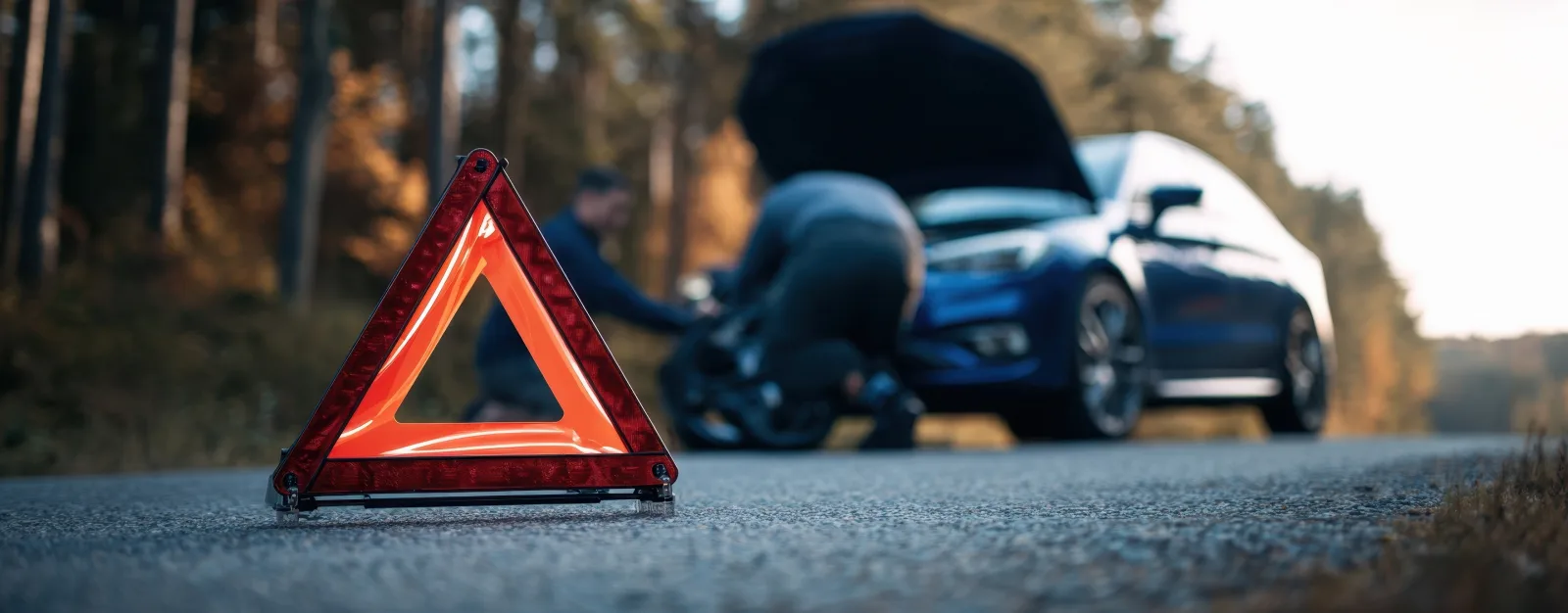
Not every breakdown needs a tow. Learn when roadside assistance may solve the issue and when towing may be the safer option.
What Roadside Assistance Is For
Roadside assistance is designed for common vehicle problems that can often be handled on-site.
Examples include:
The goal is simple: fix or stabilize the issue where the vehicle is so you can get moving again or get to the next safe step.
Roadside assistance is usually best when the problem is specific, common, and serviceable without transporting the vehicle.
- Dead battery
- Weak battery
- Jump start needed
- Battery replacement needed
- Flat tire with usable spare
- Locked keys in vehicle
- Ran out of fuel
- EV low or out of charge
- Vehicle stuck at home, work, parking lot, or roadside
What Towing Is For
Towing is used when the vehicle cannot or should not be driven and cannot be safely resolved roadside.
Towing may be needed when:
In those situations, the vehicle may need to be transported to a repair shop, tire shop, dealership, or another safe location.
- The vehicle was in a crash.
- The vehicle has major mechanical failure.
- The tire is destroyed and there is no spare.
- The wheel or suspension is damaged.
- The vehicle will not start after battery help.
- The engine overheated severely.
- The vehicle is leaking fluids.
- The transmission will not engage.
- The vehicle is stuck in a dangerous location.
- Roadside service cannot safely solve the problem.
Dead Battery: Roadside Assistance or Tow?
A dead battery is often a roadside assistance issue, not an automatic towing issue.
If the battery is discharged, a jump start may get the vehicle running. If the battery is failing, mobile battery replacement may solve the problem when the correct battery is available and the vehicle is otherwise in good condition.
Roadside assistance may be the right first step when:
Towing may be needed if the vehicle will not start after battery help or if the issue appears to be something beyond the battery, such as a starter, electrical, fuel, or mechanical problem.
- The vehicle clicks but will not start.
- The lights come on but the engine will not crank.
- The vehicle needs a jump.
- The battery keeps dying.
- The car starts after a jump but may need battery testing.
- You are stuck in a driveway, parking lot, workplace, or roadside location.
Flat Tire: Roadside Assistance or Tow?
A flat tire may be handled roadside if there is a usable spare and the vehicle is in a safe work location.
Roadside assistance may be the right first step when:
Towing may be needed when:
Roadside Responder can help with flat tire assistance and spare tire changes when safe and possible. If the vehicle cannot be safely handled roadside, a tow or tire shop may be needed.
- You have a spare tire.
- The spare is usable.
- You have the wheel lock key if needed.
- The vehicle is on stable ground.
- The location is safe enough for roadside work.
- There is no spare.
- The spare is flat, missing, or damaged.
- The tire is shredded.
- The wheel is damaged.
- The vehicle was driven on the rim.
- The vehicle is in an unsafe location.
- Lug nuts are damaged or cannot be removed safely.
Locked Keys in the Car: Roadside Assistance or Tow?
A vehicle lockout is usually a roadside assistance issue. If the keys are locked inside and the vehicle is otherwise fine, towing usually does not make sense.
Roadside assistance may help when:
Lockout service should not involve publishing entry methods or DIY instructions. The right move is to request trained help instead of damaging the vehicle.
Towing may only become relevant if there is a separate issue, such as lost keys, immobilizer problems, or a vehicle that still cannot be driven after access is restored.
- Keys are locked inside.
- The key fob is visible inside.
- The vehicle is parked safely.
- You need access without towing the vehicle.
Ran Out of Fuel: Roadside Assistance or Tow?
Running out of gas is usually a roadside assistance issue.
Emergency fuel delivery may help when:
Towing may be needed if the vehicle still will not start after fuel is added, if there is another mechanical issue, or if the vehicle is in a location where fuel delivery cannot safely resolve the situation.
Roadside Responder provides emergency fuel delivery in its service area. Pricing depends on service type, location, time of day, and whether parts or fuel are needed.
- You ran out of gas.
- You are close to empty and cannot reach a station.
- The vehicle is safely accessible.
- You need enough fuel to get moving again.
Not sure if you need roadside assistance or a tow?
Roadside Responder helps with common roadside problems like jump starts, battery replacement, flat tires, fuel delivery, lockouts, and mobile EV charging.
Get Service NowEV Out of Charge: Roadside Assistance or Tow?
An EV that is very low or out of charge is a newer roadside situation. Depending on the vehicle, location, and equipment compatibility, mobile EV charging may help provide enough charge for the next step.
Roadside assistance may help when:
Towing may be needed if mobile charging is not compatible, not available, unsafe in that location, or not enough for the situation.
Mobile EV charging should not be oversold. Charging speed, compatibility, and range depend on the vehicle and equipment.
- The EV is low or out of charge.
- The vehicle is safely accessible.
- Mobile EV charging is compatible and available.
- A limited roadside charge can help the driver reach a charger or safer location.
The Biggest Question: Can the Vehicle Be Safely Driven After Service?
The difference between roadside assistance and towing often comes down to this question:
Can the vehicle be made safe enough to drive from where it is?
If yes, roadside assistance may be the right answer.
If no, towing or repair may be needed.
A dead battery with a successful replacement may be safe to drive. A flat tire with a usable spare may be safe enough to get to a tire shop. A lockout may be solved once the vehicle is opened. An empty fuel tank may be solved with emergency fuel delivery.
But a damaged wheel, destroyed tire, major leak, crash damage, or unresolved no-start issue may require towing or repair.
Why Requesting the Right Service Matters
Requesting the wrong service wastes time.
If you call for a tow when you only need a jump start, you may wait longer and pay for transportation you did not need. If you call for roadside assistance when the vehicle clearly cannot be driven, you may still end up needing a tow.
The best approach is to describe the situation clearly.
When requesting help, provide:
Good information helps determine the best first step.
- Vehicle year, make, and model
- Exact location
- Whether you are in a safe spot
- What happened
- Warning lights or symptoms
- Whether the vehicle starts
- Whether the tire has a spare
- Whether keys are locked inside
- Whether fuel or EV charge is the issue
Roadside Responder’s Role
Roadside Responder serves Northeast Florida drivers with mobile roadside assistance in areas including Jacksonville, Saint Augustine, Saint Johns County, Nocatee, Ponte Vedra, Jacksonville Beach, Atlantic Beach, and Neptune Beach.
Services include:
The company’s role is to help with common roadside problems that can often be addressed on-site. If the situation requires towing or mechanical repair beyond roadside assistance, the driver may need a towing provider or repair shop.
- Jump Start
- Mobile Battery Replacement
- Flat Tire Service
- Vehicle Lockout
- Fuel Delivery
- Mobile EV Charging
Bottom Line
Not every roadside problem needs a tow. Dead batteries, jump starts, mobile battery replacement, flat tires with usable spares, lockouts, emergency fuel delivery, and some EV charging situations may be handled by roadside assistance.
Towing is the better fit when the vehicle cannot be made safe to drive, has major damage, has no usable tire option, or has a problem that cannot be handled roadside.
If you are not sure which one you need, request roadside help and describe the situation clearly. Roadside Responder can help determine whether roadside assistance is the right next step.