Can a flat tire be plugged on the roadside? Learn when it may be possible, when it is unsafe, and when a spare tire change is better.
What a Tire Plug Does
A tire plug is designed to seal certain punctures in the tread area of a tire. It is most commonly considered when a nail, screw, or similar object creates a small puncture in the main tread.
A plug is not the same as a full professional tire repair. Tire shops often use internal patch-plug repairs after removing the tire from the wheel and inspecting it from the inside. Roadside conditions do not usually allow that same level of inspection.
That matters because a tire can look simple from the outside and still be unsafe inside.
When a Tire Might Be Plug-Compatible
A tire may be more likely to be plug-compatible when:
Even then, roadside conditions matter. A plug may not be the right move if the vehicle is on a shoulder, near traffic, in poor weather, or in a location where the work cannot be done safely.
- The puncture is small.
- The damage is in the main tread area.
- The tire was not driven flat for a long distance.
- The sidewall is not damaged.
- The tire is not shredded, cracked, or separated.
- The puncturing object is straightforward, such as a nail or screw.
- The tire still has enough tread and is otherwise in good condition.
When a Tire Should Not Be Plugged
A tire should generally not be plugged when the damage is too risky or the tire is no longer structurally safe.
Common examples include:
Sidewall damage is especially important. The sidewall flexes differently from the tread and is not considered a safe plug location. If the sidewall is cut, punctured, bubbled, or torn, the tire usually needs replacement.
- Sidewall damage
- Shoulder damage near the edge of the tread
- A large cut or gash
- A blowout
- Visible cords or belts
- A tire that was driven flat
- A tire that came off the rim
- Multiple punctures close together
- Severe dry rot or cracking
- Damage from a curb impact
- Unknown internal damage
Why Driving on a Flat Tire Changes Everything
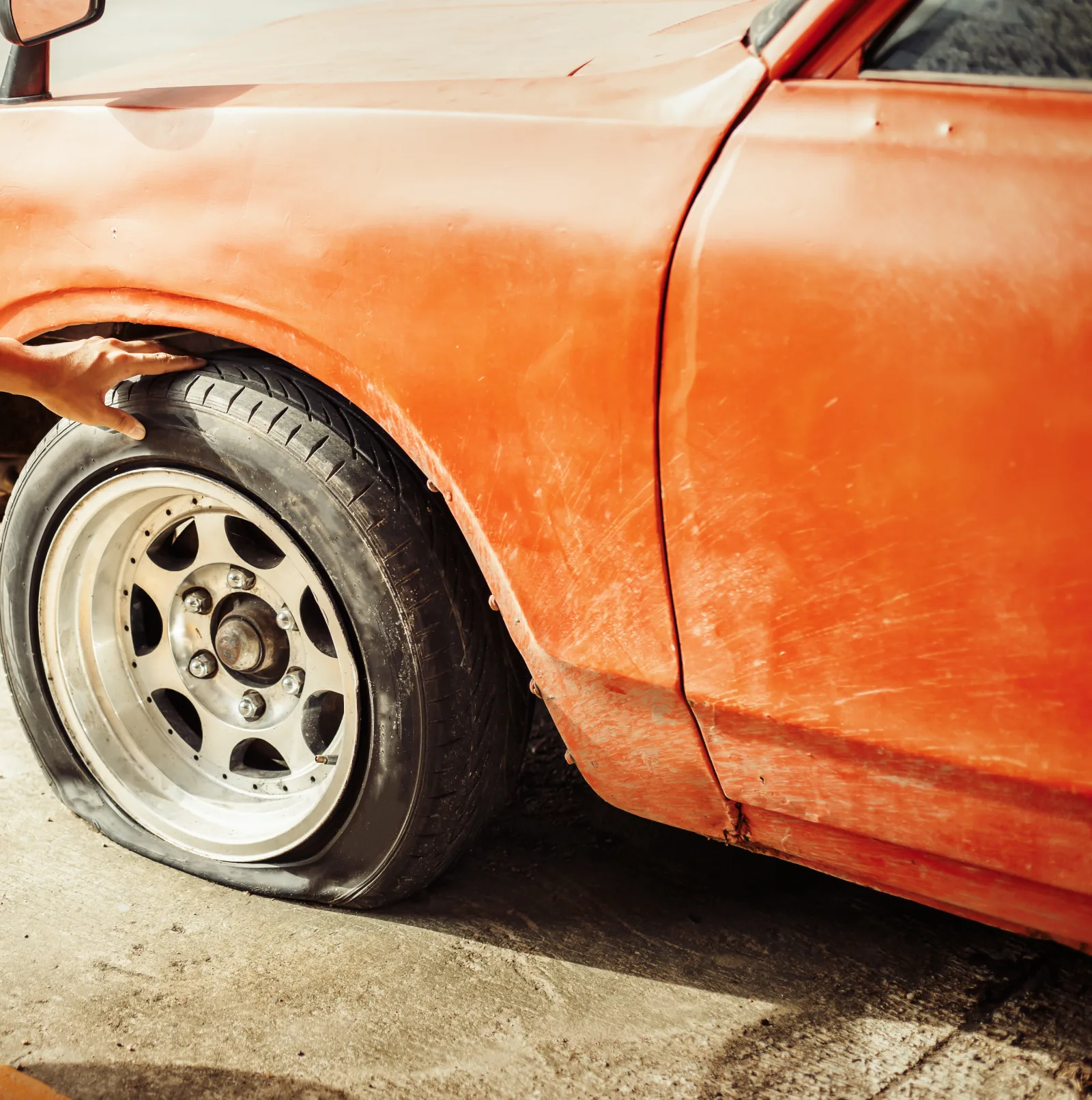
If you drive on a flat tire, even for a short distance, the tire can be damaged internally. The sidewall may be crushed between the wheel and the road. Heat can build up. The inside of the tire can break down.
From the outside, the puncture might still look like “just a nail.” But if the tire was driven flat, it may not be safe to plug.
That is why it is better to stop in a safe location as soon as you notice the issue. Continuing to drive can turn a repairable puncture into a destroyed tire or damaged wheel.
Why the Spare Tire Often Matters More
For many roadside situations, a spare tire change is the safer, cleaner, and more predictable option.
A spare tire change may be the better choice when:
A spare tire is not always a long-term solution, especially if it is a compact temporary spare. But it may get the vehicle out of a dangerous or inconvenient location and allow the driver to get proper tire service.
- The tire damage is not clearly repairable.
- The tire has sidewall damage.
- The puncture is too large.
- The tire was driven flat.
- The vehicle is in a risky location.
- You need a safer way to get to a tire shop.
- The weather or traffic makes roadside repair impractical.
What If You Do Not Have a Spare?
Many newer vehicles do not come with a traditional spare tire. Some have inflator kits. Some have run-flat tires. Some have no usable roadside tire option at all.
If you do not have a spare, the next step depends on the tire damage and what equipment is available. In some cases, an inflator kit may help temporarily. In other cases, the vehicle may need a tow through a towing provider.
Roadside Responder can help assess the situation and provide flat tire assistance within the scope of available roadside service. But if the tire is unsafe and there is no usable spare, towing or tire replacement may be required.
Flat tire and not sure what to do?
Roadside Responder can help with flat tire assistance, including spare tire changes when safe and possible. Request help and we’ll help determine the next step.
Get Service NowRoadside Safety Comes First
The tire is not the only concern. Location matters.
Changing or inspecting a tire on the side of a busy road can be dangerous. Traffic, narrow shoulders, poor lighting, rain, soft ground, and limited visibility all affect whether roadside work is safe.
If you get a flat tire:
1. Slow down gradually. 2. Avoid sudden braking if possible. 3. Move to the safest available location. 4. Turn on hazard lights. 5. Stay aware of traffic. 6. Avoid standing near moving vehicles. 7. Request help if the location is not safe.
A tire plug is never worth putting someone in a dangerous position.
Can Roadside Responder Plug My Tire?
Roadside Responder’s flat tire assistance should be understood primarily as roadside help, especially spare tire changes when safe and possible. A plug is not something that should be promised as a guaranteed service.
Whether a tire can be plugged depends on tire condition, puncture location, safety, equipment, and service policy. Some tires should not be plugged at all. Some situations are better handled with a spare tire change or by getting the vehicle to a tire shop.
The safest published expectation is this: Roadside Responder can help you evaluate the flat tire situation and assist with the practical roadside option, such as installing a usable spare when safe and possible.
What To Check Before Help Arrives
If you are safely parked, you can check a few things without putting yourself in danger:
Do not crawl under the vehicle. Do not stand close to traffic. Do not attempt work in an unsafe location.
This information can help the roadside provider understand what is likely needed.
- Do you have a spare tire?
- Is the spare inflated?
- Do you have a wheel lock key if your wheels use locking lug nuts?
- Where is the damage on the tire?
- Did you drive on the flat?
- Is the tire shredded or separated?
- Are you in a safe place to work?
Local Flat Tire Situations in Northeast Florida
Flat tires happen in all kinds of local situations: parking lots, driveways, office parks, beach areas, shopping centers, apartment communities, and road shoulders.
In Jacksonville, Saint Augustine, Saint Johns County, Nocatee, Ponte Vedra, Jacksonville Beach, Atlantic Beach, and Neptune Beach, drivers may deal with construction debris, nails, screws, curb impacts, potholes, and heat-related tire problems.
The right response depends on the exact situation. A small nail in a safe parking lot is different from a sidewall blowout on a busy roadway.
What Roadside Responder Can Do
Roadside Responder provides flat tire assistance in Northeast Florida. Depending on the situation, service may include:
Pricing depends on service type, location, time of day, and whether parts are needed.
Roadside Responder aims for fast local response, but response times depend on location, traffic, weather, and active jobs.
- Helping inspect the roadside tire situation
- Installing a usable spare tire when safe and possible
- Helping drivers understand when the tire is not safe to drive on
- Assisting in parking lots, driveways, workplaces, and roadside locations
- Helping determine when another service, such as towing or tire shop repair, may be needed
Bottom Line
A flat tire can sometimes involve a puncture that looks plug-compatible, but roadside plugging is not always safe or appropriate. Sidewall damage, blowouts, large cuts, driven-flat tires, and unsafe roadside locations can all make plugging the wrong choice.
For many drivers, a spare tire change is the safer roadside solution. If you are stuck with a flat tire in Northeast Florida, Roadside Responder can help with flat tire assistance and determine the practical next step.