Have a flat tire and no spare? Learn your safest options, what to check, and when to request roadside assistance.
First, Get to the Safest Place You Can
If you notice a flat while driving, do not slam on the brakes unless you have to. Slow down gradually, keep control of the steering wheel, and move to the safest nearby location.
A safe location may be:
Turn on your hazard lights. Avoid standing near traffic. If the location feels unsafe, stay inside the vehicle if that is safer and call for help.
Do not keep driving just because you are close to home. Driving on a flat tire can damage the tire, wheel, suspension, and other components. It can also make a tire that might have been repairable completely unusable.
- A parking lot
- A wide shoulder
- A gas station
- A driveway
- A side street
- A well-lit public area
- A workplace parking lot
Confirm Whether You Really Have No Spare
Before assuming you have no spare, check the vehicle carefully if it is safe to do so.
Common spare tire locations include:
Also check for:
Some vehicles include a compressor and sealant instead of a spare. Others include run-flat tires designed to be driven a limited distance under specific conditions. Your owner’s manual may explain what your vehicle has.
If you are not sure, roadside assistance can help check.
- Under the trunk floor
- Under the rear cargo area
- Mounted underneath the vehicle
- On the rear door of some SUVs
- Behind side panels
- In truck beds or under the bed
- Jack
- Lug wrench
- Wheel lock key
- Tire inflator kit
- Sealant kit
- Run-flat tire information
Look at the Tire Damage Without Taking Risks
Only inspect the tire if you can do it safely. Do not stand close to traffic or crawl under the vehicle.
Look for obvious signs:
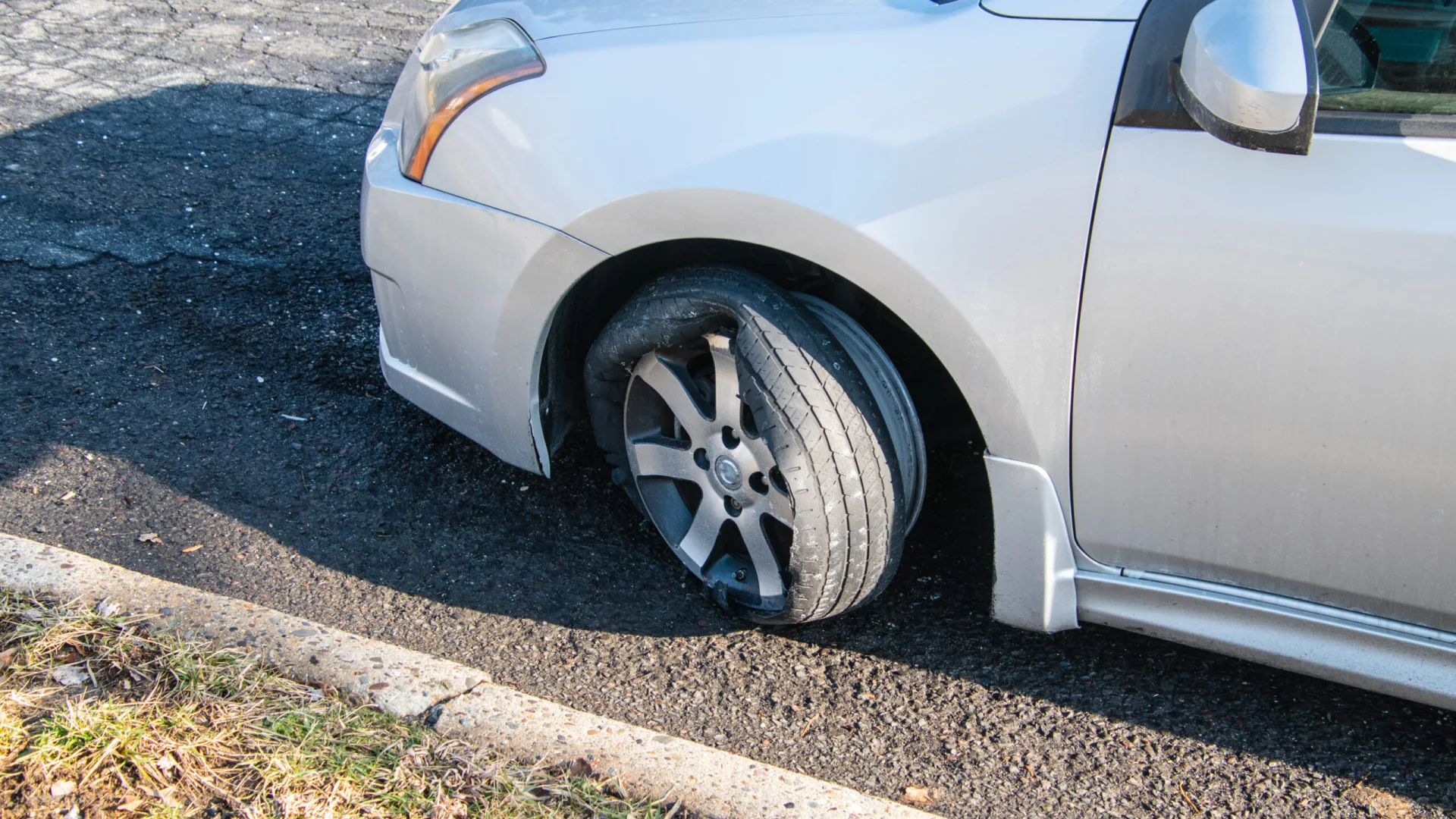
If the tire is shredded, has sidewall damage, or was driven flat, it may not be safe to repair roadside. If there is no spare, the vehicle may need towing or tire replacement.
- Nail or screw in the tread
- Sidewall cut
- Tire separated from the rim
- Shredded tire
- Blowout damage
- Bulge or bubble
- Torn sidewall
- Wheel damage
Do Not Drive on the Flat Unless It Is Truly Necessary
Driving on a flat tire can turn a bad situation into an expensive one. Even a short distance can destroy the tire or damage the wheel.
You should avoid driving if:
If the vehicle has run-flat tires, follow the vehicle manufacturer’s limits. Run-flat tires are not a free pass to keep driving normally. Distance and speed limits still matter.
- The tire is completely flat.
- The vehicle is pulling hard.
- You hear grinding, flapping, or thumping.
- The tire is separating.
- The wheel may be contacting the road.
- You have to drive at normal traffic speeds.
- You are not sure if the tire is run-flat rated.
Can an Inflator Kit Help?
Some vehicles include a tire inflator or sealant kit. These kits may help with small tread punctures, but they are not useful for every flat.
An inflator kit may not work if:
Inflator kits can be helpful in limited situations, but they are not a substitute for a spare tire in every case.
- The tire has sidewall damage.
- The puncture is too large.
- The tire came off the rim.
- The tire is shredded.
- The valve stem is damaged.
- The tire was driven flat.
- The sealant is expired or missing.
- The compressor does not work.
Can the Tire Be Plugged Roadside?
Sometimes drivers ask whether a roadside plug can solve the issue. The answer depends on the damage and the situation.
A plug may only be considered when the puncture is small and in the tread area. It is generally not appropriate for sidewall damage, large cuts, blowouts, or tires that have been driven flat.
Roadside Responder should not be treated as a guaranteed tire plug provider. The safer service expectation is flat tire assistance, including help assessing the situation and changing to a usable spare when available and safe.
If there is no spare and the tire is not safely repairable roadside, towing or tire shop service may be needed.
Why So Many Cars Do Not Have Spares
Manufacturers may leave out spare tires to reduce weight, improve fuel economy, save space, or lower production costs. That does not help when you are stranded.
Vehicles without traditional spares may rely on:
The problem is that these options only work in certain situations. A sidewall blowout or shredded tire usually cannot be solved with sealant.
If you recently bought a vehicle, it is worth checking whether it has a spare before you need one.
- Run-flat tires
- Inflator kits
- Sealant kits
- Roadside assistance
- Tire mobility kits
Flat tire with no spare?
If you are stuck with a flat tire and no usable spare, Roadside Responder can help assess the situation and guide the safest next step.
Get Service NowWhat Roadside Assistance Can Still Do
Even without a spare, roadside assistance can still help.
Roadside Responder may be able to:
The exact solution depends on the vehicle, tire condition, location, and safety of the work area.
- Help identify whether you have a spare or tire kit
- Inspect the roadside situation
- Help determine if the tire is safe to inflate
- Change to a usable spare if one is found
- Help you understand when the vehicle should not be driven
- Assist with next-step guidance if towing or tire shop service is needed
Local Situations Where This Happens
Flat tires with no spare are common in Northeast Florida. Drivers may get stuck at grocery stores, office parks, beaches, apartment complexes, school pickup lines, gas stations, or on the shoulder.
In Jacksonville, Saint Augustine, Saint Johns County, Nocatee, Ponte Vedra, Jacksonville Beach, Atlantic Beach, and Neptune Beach, tire problems can come from construction debris, nails, screws, potholes, curbs, heat, and worn tires.
No spare makes the situation more complicated, but it does not mean you should panic or keep driving on the flat.
What To Tell Roadside Responder When You Request Help
When requesting help, provide as much useful information as possible:
This helps determine the likely service options before arrival.
- Your exact location or nearest landmark
- Whether you are in a safe location
- Whether the tire is front or rear
- Whether you have a spare
- Whether you have a wheel lock key
- Whether the tire is shredded or just low
- Whether you drove on the flat
- Vehicle year, make, and model
- Any special access details, such as gate codes or parking garages
How To Prevent This Situation Later
After the immediate issue is handled, check your vehicle setup.
Consider:
A spare tire that is flat, missing, or inaccessible does not help much during an emergency.
- Confirming whether your vehicle has a spare
- Checking spare tire pressure regularly
- Making sure the jack and lug wrench are present
- Locating the wheel lock key
- Replacing expired sealant kits
- Keeping roadside assistance information handy
- Checking tire condition before long drives
What Roadside Responder Can Do
Roadside Responder provides flat tire assistance throughout Northeast Florida. Service may include spare tire changes when the spare is usable and the location is safe. If there is no spare, Roadside Responder can help assess the situation and guide the safest next step.
Roadside Responder aims for fast local response, but response times depend on location, traffic, weather, and active jobs.
Pricing depends on service type, location, time of day, and whether parts are needed.
Bottom Line
If you have a flat tire and no spare, do not keep driving on the flat unless there is no safer option. Get to a safe location, check whether your vehicle has a spare or inflator kit, and request help if you are not sure what to do.
Some flats can be handled roadside. Others need a tire shop or towing provider. Roadside Responder can help with flat tire assistance and guide the safest next step for your situation.